
Medical Blogs/Pharma Blogs/Healthcare Blogs

Bridging Gaps, Crossing Barriers of Communication
Connecting Worlds with Words
Medical Blogs| Pharma Blogs | Health Care Blogs | Lifestyle Blogs

type-1 diabetes requires more hand holdings.

Type1 diabetes is a lifelong condition. It can’t be altered without insulin. When left undiagnosed or ignored, accelerates the wreck. The lack of awareness and ignorance can breach even the most finely tuned healthcare systems.

Health care in overcrowded emerging countries like ours lags, have not touched every nook and cranny. It’s perplexing when the entire blame is attributed solely to the government.

Silent Struggles of a Rural Community: "Type 1 Diabetes Diagnosis Story"

It is worrying to see in a village near Chandigarh, which is known for being advanced, a young person getting hit with diabetes, and who knows how many others might be in the same boat. Juvenile diabetes is escalating with an increase of 3–5% every year.

An innocent young girl, full of life and dreams, could not recognize what caused her riddles or led her to these predicaments. At a community health care camp, she was screened for having 450 random sugars, much beyond the normal range. she is only twenty-one, but this diabetes thing snuck up on her when she was just fourteen.

For the past 8 years, she has been striving all alone for the excruciating melancholy, without any medical assistance. she has been fighting in the dark, not knowing which way to turn. She was unable to walk, eat or stand. At an enthusiastic age of Vigor and career-building, she was confined to bed.

High sugar level induced vomiting. Slipping into neuropathy, she could not mount herself erect. She was erroneously put on antibiotics for around 2 years.

Community health care workers opened a window at PGI for her treatment, but not having access to public transport, she did not reach PGI.

Poverty is another illness and when coupled with illiteracy intensifies the misery. Her parents and three siblings comprised her family. She was the middle of the three. The little brother attends school, while the older sister performs some stitching. Father was a daily wage worker. He could not withdraw a day off work as he was the sole breadwinner of the family. The young girl was left helpless and unaided. The chains of poverty and illiteracy tighten their grip.

"Empowering Hope": How a Rotaract Member Transformed a Life with Diabetes?

A Rotaract member from the community health care team endeavoured to reach the family and took it a responsibility to help them. kindness is not a behavioural trait but rather a product of a deep moral understanding.

Become a beacon of sunshine amid someone’s stormy world, helping others is not a casual pastime; it demands a significant investment of your time and dedication.

About the hurdles, with unwavering determination, he guided the family to the doorstep of an endocrinologist. Alongside the medical consultation, he secured a glucose monitoring kit, insulin, and all the necessary components of a comprehensive treatment plan.

Subsequently, after a gruelling battle, she emerged victorious, and her sugar levels descended to a manageable 150. Now, she could walk, savour her meals, and relish life’s simple pleasures, just like any other person.

This unexpected assistance was no less than a premium reward, breathing new life into her dreams and aspirations.

Knowing "Irreversible Type1 diabetes"

Type 1 diabetes, an autoimmune disease, can manifest at any age due to environmental triggers or may have a genetic basis, especially in young children.

It’s the beta cells of the pancreas that are destroyed and unable to produce enough insulin to digest glucose, leading to glucose accumulation in the blood.

Once the beta cells are destroyed, they cannot regenerate, resulting in a lifelong dependency on exogenous insulin to regulate blood sugar levels.

Type1 Diabetes: Impacting Beyond Age and Family History

Misconceptions about type-1- diabetes often lead to delayed diagnosis and inadequate support, as many mistakenly believe it only affects older adults or individuals with a family history, overlooking its prevalence in children and young adults.

Detecting Diabetes Danger: Understanding "Ketoacidosis and Its Life-Threatening Risks"

Type 1 diabetes is often diagnosed during ketoacidosis, a severe condition due to inadequate insulin, leading the liver to break down fat for energy, resulting in ketone body accumulation.

diabetes ketoacidosis

This can lead to life-threatening complications like kidney damage, cardiovascular disease, and vision loss if not promptly treated.
Mastering Type 1 Diabetes: "7 Essential Strategies for Optimal Control"

  •  Early Detection
  • Personalised Insulin therapy
  • Continuous Glucose Monitoring
  • Proper insulin storage
  • Diet management
  • Exercise
  • Education and acceptance

"Unlocking Early Detection: Safeguarding Against Diabetes's Silent Threat"

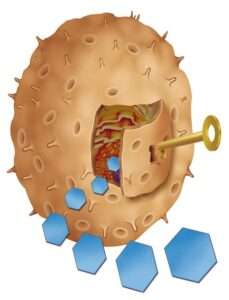
antibodies irreversibly locking insulin producing beta cells in type-1 diabetes. Type1 diabetes presents dramatically as the pancreas abruptly stops producing insulin, akin to a lock-and-key system where pancreatic cells are “locked” by antibodies, resulting in a complete inability to produce insulin.

Contrastingly, type 2 diabetes progresses gradually due to worsening insulin resistance, leading to inadequate insulin production.

Symptoms, not to be ignored:

  • Excessive thirst
  • Frequent urination
  • Unexplained weight loss
  • Nighttime bedwetting
  • Frequent diaper changes in children, may signal underlying issues.
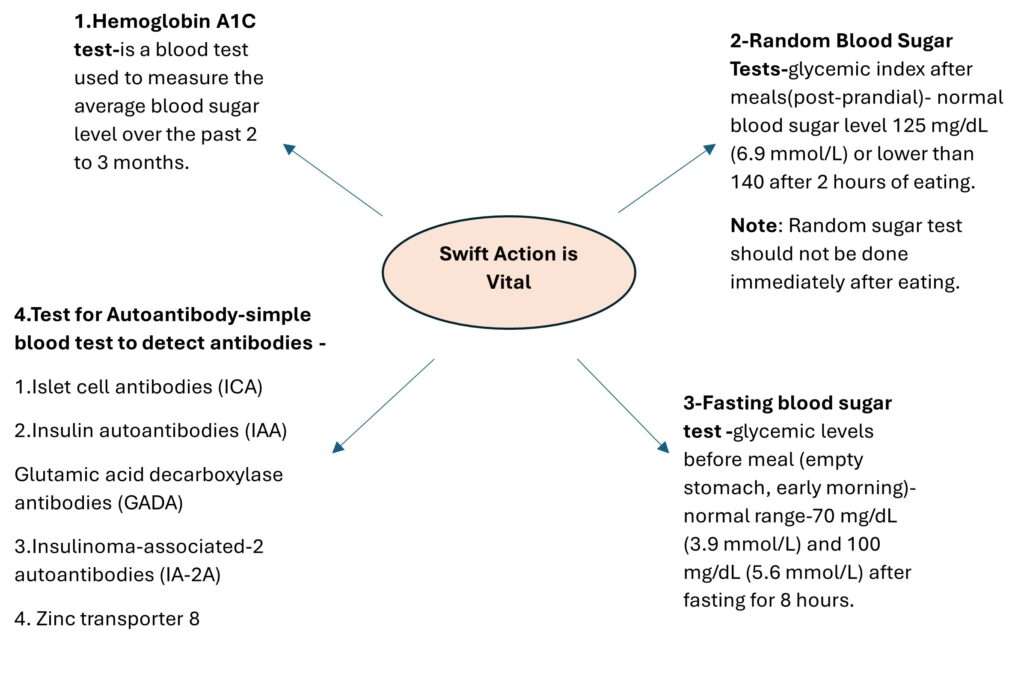
Swift Action: Crucial Tests for Type 1 "Diabetes Detection"

Test for type1 diabetes

Unveiling the Mystery of the "Honeymoon Phase in Type 1 Diabetes": A Commonly Misunderstood Transition

Honey Moon Phase occurs when some beta cells in the pancreas survive the initial immune system attack and continue producing insulin, leading to relatively stable blood sugar levels and potentially reduced insulin requirements.
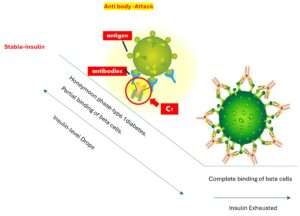
Honeymoon Phase-Type 1 diabetes.

Lasting typically from 1 to 13 months after diagnosis, the honeymoon phase is often misunderstood as signaling the end of insulin reliance.

However, it’s essential to recognize that this phase is temporary, and eventually, the remaining beta cells will also be destroyed, resulting in a complete loss of insulin production.

It’s vital to promptly adjust insulin dosage once this phase ends to maintain stable blood sugar levels.

While regular exercise may help extend the duration of the honeymoon phase by improving insulin sensitivity and metabolic health.

it’s crucial to understand that it’s only a temporary reprieve, and insulin dependency will return.

Empowering Resilience: "Optimizing Diabetes" Management for Active Lives

Indeed, a strategic approach to diabetes management can empower a child to be resilient and actively participate in activities, including sports, while others may avoid such opportunities due to their condition.

The outcome diverges dramatically between individuals sharing the same diagnosis. The difference lies in effective management.

One thought on “Type 1 Diabetes demand more Hand Holdings”

Leave a Reply

Your email address will not be published. Required fields are marked *